
Phoenix Insurgent
Below I have linked to the text of a flyer distributed Tuesday at the Border Security Expo by PCWC's comrades in the local pro-migrant anarchist group CAROB. Organizers of the Expo itself recently reported their satisfaction with the event, which eerily presented a variety of technologies that vendors hope to see deployed sooner rather than later at the border, but which we will surely see not long after on our streets and in the hands of local police forces. Obama's recent re-invigoration of the high tech border effort will certainly help things move along in that unfortunate respect.
Considering the CAROB flyer, I think it does several things worth remarking on that we at PCWC have been trying to work on ourselves. Most importantly, from my perspective, the piece looks for connections, fault lines and hypocrisies that result from or defy spoken or unspoken ideologies. For instance, linking the deployment of surveillance technology narrowly at the border to their broader spread away from the border and onto our freeways is a point well worth pushing (and one made by the infamous Santa's last Christmas). The same is true with the point about comparing the border and the airport. After all, it's freedom of movement that is being both challenged and defended within the camera/checkpoint dialogue.
At PCWC we've explored similar terrain with our pieces about the light rail and immigrant detention camps. A soon to be forthcoming article by me on cameras statewide and the resistance to them in one context, versus the embracing of them in the other will explore the white supremacist tension that lies at the heart of both issues: that freedom of movement is reserved for whites, not for migrants. One of the interesting things about the Arizona movement against immigration, against the internal checkpoints and against the roadside cameras is its generally libertarian composition. There is much overlap within each particular facet and each makes similar appeals and arguments, but each is tainted by an underlying and often unstated white supremacist assumptions. Presciently, CAROB has recognized the link here between the resistance by many in the white libertarian movement and whites in general to the internal checkpoints, even as these same people remain generally mum or even supportive when it comes to their utilization against migrants or on Native lands.
For instance, evoking the magical word "citizen" is a frequent line of defense used by those white libertarians that challenge the checkpoints, revealing a tacit acceptance of the police tactic if only it were deployed against what are presumed to be the right people -- i.e., Mexicans and others categorized as alien by the white power system (which has historically included more than just migrants). We see further in this example how the word "citizen" itself operates as a codeword for "white" in most cases. Sadly, references to the constitution itself, in this context, likewise echo past rejoinders for the defense of white citizenship. Clearly, such positions have no place in a truly libertarian movement.
Which is precisely why they are so interesting to engage. While many people find the contradictions above reason enough to define an opposition and to line up against it, those of us here at PCWC are more interested in what unseen opportunities may be revealed by them. Which is not to say that one would form an alliance with racist reactionaries. Obviously not. However, not every white libertarian is a Minuteklan supporter. And much of the support in the broader white community isn't as deep as it seems at first glance.
If contradictions exist (and they surely do), within their debate, then it means opportunities to engage with libertarian elements inclined to an anti-racist dialogue that defy the left-right straightjack may present themselves and, if finessed and studied, they may provide the potential to redefine the way that whiteness plays out in that context. Perhaps a rift can be created between the reactionaries and wider white society by focusing on these potentialities. And shifting the ground under whiteness opens further opportunities for class struggle.
For instance, and from a fanatical point of view, a campaign against the internal checkpoints that adheres to unbending opposition to white supremacy might reveal some interesting partners and openings for class struggle and, just as importantly, for the liberation of spaces in the southwest for movement by all people. This is something we here at PCWC have really just started to explore but I think it's quite worth investigating.
Read CAROB's interesting article here:
CAROB flier for Border Security Expo
Thursday, May 14, 2009


Monday, May 11, 2009
News of Interest 5/11/09
For Somali Pirates, Worst Enemy May Be on Shore

U.S., Europe Are an Ocean Apart on Human Toll of Joblessness
The masterpiece that killed George Orwell

A Pocket-Size Leveler in an Outsize Land

Prison radio station is nominated for four national awards
-Times of London
DOJ Budget Details High-Tech Crime Fighting Tools

Mr. Boyah, who lives in a simple little house, explains: “Don’t be surprised when I tell you all the money has disappeared. When someone who never had money suddenly gets money, it just goes.”-New York Times
He claims that his estimated take of several hundred thousand dollars disappeared down a vortex of parties, weddings, jewelry, cars and qat, the stimulating leaf that Somalis chew like bubble gum. Also, because of the extended network of relatives and clansmen, “it’s not like three people split a million bucks,” he said. “It’s more like 300.”
Oh, Mr. Boyah added, he also gives 15 percent to charity, especially to the elderly and infirm. “I’d love to give them more,” he said.
Over all, he seemed like a man on a genuine quest for redemption — or a very good liar.
U.S., Europe Are an Ocean Apart on Human Toll of Joblessness
The little German town of Hohenlockenstedt, where Mr. Butt worked, also used to be a manufacturing powerhouse. In the 1970s it had more industrial jobs than inhabitants; factories had to bus workers in.-Wall Street Journal
Today, hardly any industry is left. In December, the auto-parts factory where Mr. Butt worked for eight years, HWU GmbH, announced its own shutdown. Workers protested, occupying the factory for a week. Mr. Butt, a burly 42-year-old, participated as employees barricaded the gates with forklifts and slept in the factory's canteen. Their demand: Save our jobs.
It was hopeless. Mr. Butt found himself out of work in January. Normally, German workers get severance pay in large-scale layoffs, but HWU didn't have enough money. As a result, Mr. Butt's benefits are about as bad as it gets for a laid-off German factory worker. Still, compared with the U.S., it's a lucrative package. First, he (and everyone else) got a job at a so-called "transfer" company, a private business that offers training and job-hunting advice with funding from the state and the former employer.
Through transfer companies, German workers can receive the bulk of their former salary for as much as a year before they even have to apply for unemployment. Mr. Butt is getting four months at 80% of his old salary of €2,700 (roughly $3,600) a month. After tax, he's taking home about €350 less than before.
The masterpiece that killed George Orwell
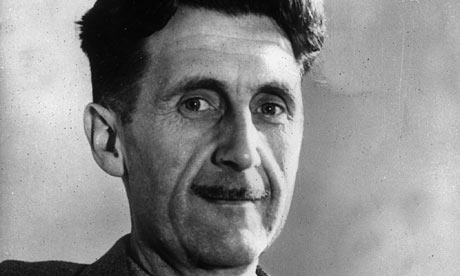
The circumstances surrounding the writing of Nineteen Eighty-Four make a haunting narrative that helps to explain the bleakness of Orwell's dystopia. Here was an English writer, desperately sick, grappling alone with the demons of his imagination in a bleak Scottish outpost in the desolate aftermath of the second world war. The idea for Nineteen Eighty-Four, alternatively, "The Last Man in Europe", had been incubating in Orwell's mind since the Spanish civil war. His novel, which owes something to Yevgeny Zamyatin's dystopian fiction We, probably began to acquire a definitive shape during 1943-44, around the time he and his wife, Eileen adopted their only son, Richard. Orwell himself claimed that he was partly inspired by the meeting of the Allied leaders at the Tehran Conference of 1944. Isaac Deutscher, an Observer colleague, reported that Orwell was "convinced that Stalin, Churchill and Roosevelt consciously plotted to divide the world" at Tehran.-The Guardian
A Pocket-Size Leveler in an Outsize Land

The cellphone appeals, too, because it plays into the Indian need to place people. Cellular differences today perform the role that forehead markings and strings around torsos and metal bracelets once did: announcing who outranks whom.-The New York Times
Small people have small phones, and big people have big ones. Small people have numerical-soup numbers, and big people have numbers that end in 77777 or something equally important-sounding or easy to remember. Small people have one phone, and big people have two. Small people set their phones merely to ring, and big people make Bollywood songs play when you call them.
The cellphone, in short, has made itself Indian. There are 65 times more cellphone connections than broadband Internet links, and the gap is widening. And so those who wish to influence Indians are not waiting for the computer to catch on, but are seeking ways to adapt the cellphone to the things Westerners do online.
Indian companies have invented methods, via simple cellphone text-messaging, to wire money to temples, pay for groceries, find jobs and send and receive e-mail messages (on humble phones with no data connection).
But the most intriguing notion is that cellphones could transform Indian democracy.
Even in this voting season — the results of a four-week election will be announced May 16 — Indians are famously cynical about their senior-citizen-dominated, dynastic, corrupt politics. The educated often sit out elections. But with cellphones becoming near universal, experiments are sprouting with the goal of forging a new bond between citizen and state, through real-time, 24-hour cellular participation.
Prison radio station is nominated for four national awards
Although prison radio has been around since the mid-1990s in Britain, when Feltham Young Offenders Institute started a station, there is now one in every seven prisons.
The aim is to provide communication at a place where conditions are poor, and where prisoners, who are on remand awaiting trial on allegations ranging from credit card fraud to murder, arrive with a typical reading age of about 11. Nominated in the speech category at tonight’s awards is Prisoner’s Voices, a discussion programme in which inmates interview each other — and where Mark (not his real name), who has “a lot of hate and dislove for myself”, talks about cutting his wrists and says that his arms “to be honest, look a mess”.
A prisoner harms himself every other day at HMP Brixton, and while most incidents are trivial, seven inmates killed themselves between 2006 and 2008, at a jail that the chief inspector described as one that “exemplifies all the problems of our overcrowded prison system”.
-Times of London
DOJ Budget Details High-Tech Crime Fighting Tools
Another high-tech program includes the development of the Biometric Technology Center, a joint Justice, FBI and DoD program. Building the center will cost $97.6 million and will serve as a research and development center for biometric technology.-ABC News
Last year, the FBI announced it would partner with the University of West Virginia to establish the center. Eventually, the Biometric project will be a vast database of personal data including fingerprints, iris scans and DNA which the FBI calls the Next Generation Identification (NGI).
The FBI has awarded the NGI contract to Lockheed Martin to update and maintain the database which is expected to come online in 2010. After being fully deployed the NGI contract could cost up to $1 billion.
DOJ's budget request also mentions an INTERPOL program called Project Vennlig, which is a terrorist information sharing program run by the international anti-crime organization. The Defense Department initiated the program to obtain criminal information about insurgents killed or captured in Iraq.
The DOJ budget request notes the program gathers information from insurgents' cell phones and documents found in their possession: "The purpose of the initiative is to obtain and integrate collected information for the use of INTERPOL member countries and U.S. law enforcement agencies in proactively targeting terrorism."
Friday, May 8, 2009
Joel Olson: Politics of Protestant Violence: Abolitionists and Anti-Abortionists
Phoenix Insurgent
Joel Olson's politics have influenced those of us in PCWC a great deal, there's no doubt about that. Not so much when it comes to the organizational question (Joel is a founding member of Bring the Ruckus, a group that PCWC has come into conflict with several times), but certainly when it comes to the fundamental importance of white supremacy in American society. Of course, that's just fine because we at PCWC take what we think is worth taking from wherever it needs taking from.
For those that don't know, essentially boiled down to its essence, race traitor politics is an analysis that puts forward the hypothesis that white supremacy is the primary contradiction in American politics. Whiteness is a political relationship and a political alliance. Said another way, whiteness is the agreement between what we call white people of all classes that, in exchange for not upsetting the capitalist applecart, even poor whites will receive a series of benefits above and beyond similarly classed people of other races. And this necessarily means the continued exploitation and reduced status of people of color. Thus it puts white people's political aspirations in contradiction to those of the rest of the working class and therefore likewise against the cause of revolution.
For instance, much more than people of color, even a poor white can expect not to be harassed by the police as much (and therefore to remain out of the prison system), to have better access to schools and health care, to have access to better jobs and higher income, and to accumulate family wealth and a variety of other benefits. In order to receive these benefits, poor and middle class white folks have to agree to a devil's bargain with rich whites. This cross-class alliance is responsible for the otherwise unexplainable and bizarre political behavior of whites, who consistently refuse (much to the consternation of liberals and leftists of all stripes) to take revolutionary or even progressive positions of solidarity with people of color (witness the immigration question here in Arizona, where Sheriff Joe's electoral numbers are dwarfed by the totals in favor of anti-immigrant propositions). It explains why whites do not find common cause with people of color from their own class: they have been given a sort of aristocratic position within the class. It's what DuBois called the "wages of whiteness". Thus, whites wind up reactionaries that defend the current order. They defend their whiteness. And that sustains capitalism, despite the fact that even white folks who aren't rich are exploited under the system as well.
Of course, strategically this has implications for the way we organize. The analysis suggests that, if white supremacy is so important to the maintenance of capitalist domination in the US, then the way to attack that domination is to put that glue, white supremacy, into crisis. In essence, not to act politically like a white person. The idea is that if the elite can no longer count on the allegiance of white folks to white supremacy, then the opportunity for a real attack on capitalism and the state become possible.
Anyhow, there's more to it than that, but that's it in a nutshell. One of the other interesting things that Joel researches is the role of fanaticism in politics. A couple years ago, he gave a talk at ASU on fanatacism which I recommend everyone listen to, and I did an analysis of it at my old blog, Phoenix Insurgent (check both out here). As Joel puts it, fanaticism is "a critique and a rejection of political moderation - not a rejection of reason, of rationality or anything like that. And, as such, fanaticism and reason can be consistent. And furthermore, it can be consistent with justice and democracy in times when moderation lends support to the enemies of democracy."
In essence, fanaticism is a political orientation towards both one's enemies and the middle ground at the same time. It seeks to evaporate the middle ground occupied by political moderates at the same time it engages its enemies. That's because the fanatic wants to force sides to be drawn on an issue. The fanatic seeks to polarize.
This jibes really well with the anti- or post-leftism that guides many of PCWC's actions and ideas. Leftism, as I see it is a false political alliance that assumes relationships and a continuity of ideas and goals that is simply not generally borne out by history. That is, if the anarchist and the communist are both leftists, then why does the communist sell out the anarchist (and everyone else, for that matter) so frequently in history? Likewise the liberal. So often the mantra on the left is that "we're all on the same side". But the results of political struggle tell a different story. That's reason to question the existence of the left, then, at least in terms of revolutionary strategy.
So, whereas the post-leftist looks for alliances that break out of or defy the tired old leftist spectrum, the fanatic seeks to do a very similar thing, although by pointing a good deal of its arrows at political moderates -- many of whom may pose as more pragmatic allies. To the fanatic, the existence of the moderate is a political problem that must be resolved if progress is to be made. The moderate is a political impediment. To this end, the fanatic takes positions and actions that force the middle to make a choice.
Anyhow, the long and short of it is that Joel has been doing some interesting research that brings the two main currents that PCWC agrees with him on together in his study of the abolitionists and fanatacism. Here in Phoenix, PCWC has been circulating and promoting his ideas in this regard (and we carry his book, "The Abolition of White Democracy") and so it was with some excitement that it came to my attention via Collin Sick that Joel had recently given a talk on the topic at NAU (where he teaches) and that the video had made it onto the internet. Thanks to whoever put it up we can now all enjoy it. I recommend it highly and I've posted the first of four parts below. Check it out. The other four parts are posted here.
Joel Olson's politics have influenced those of us in PCWC a great deal, there's no doubt about that. Not so much when it comes to the organizational question (Joel is a founding member of Bring the Ruckus, a group that PCWC has come into conflict with several times), but certainly when it comes to the fundamental importance of white supremacy in American society. Of course, that's just fine because we at PCWC take what we think is worth taking from wherever it needs taking from.
For those that don't know, essentially boiled down to its essence, race traitor politics is an analysis that puts forward the hypothesis that white supremacy is the primary contradiction in American politics. Whiteness is a political relationship and a political alliance. Said another way, whiteness is the agreement between what we call white people of all classes that, in exchange for not upsetting the capitalist applecart, even poor whites will receive a series of benefits above and beyond similarly classed people of other races. And this necessarily means the continued exploitation and reduced status of people of color. Thus it puts white people's political aspirations in contradiction to those of the rest of the working class and therefore likewise against the cause of revolution.
For instance, much more than people of color, even a poor white can expect not to be harassed by the police as much (and therefore to remain out of the prison system), to have better access to schools and health care, to have access to better jobs and higher income, and to accumulate family wealth and a variety of other benefits. In order to receive these benefits, poor and middle class white folks have to agree to a devil's bargain with rich whites. This cross-class alliance is responsible for the otherwise unexplainable and bizarre political behavior of whites, who consistently refuse (much to the consternation of liberals and leftists of all stripes) to take revolutionary or even progressive positions of solidarity with people of color (witness the immigration question here in Arizona, where Sheriff Joe's electoral numbers are dwarfed by the totals in favor of anti-immigrant propositions). It explains why whites do not find common cause with people of color from their own class: they have been given a sort of aristocratic position within the class. It's what DuBois called the "wages of whiteness". Thus, whites wind up reactionaries that defend the current order. They defend their whiteness. And that sustains capitalism, despite the fact that even white folks who aren't rich are exploited under the system as well.
Of course, strategically this has implications for the way we organize. The analysis suggests that, if white supremacy is so important to the maintenance of capitalist domination in the US, then the way to attack that domination is to put that glue, white supremacy, into crisis. In essence, not to act politically like a white person. The idea is that if the elite can no longer count on the allegiance of white folks to white supremacy, then the opportunity for a real attack on capitalism and the state become possible.
Anyhow, there's more to it than that, but that's it in a nutshell. One of the other interesting things that Joel researches is the role of fanaticism in politics. A couple years ago, he gave a talk at ASU on fanatacism which I recommend everyone listen to, and I did an analysis of it at my old blog, Phoenix Insurgent (check both out here). As Joel puts it, fanaticism is "a critique and a rejection of political moderation - not a rejection of reason, of rationality or anything like that. And, as such, fanaticism and reason can be consistent. And furthermore, it can be consistent with justice and democracy in times when moderation lends support to the enemies of democracy."
In essence, fanaticism is a political orientation towards both one's enemies and the middle ground at the same time. It seeks to evaporate the middle ground occupied by political moderates at the same time it engages its enemies. That's because the fanatic wants to force sides to be drawn on an issue. The fanatic seeks to polarize.
This jibes really well with the anti- or post-leftism that guides many of PCWC's actions and ideas. Leftism, as I see it is a false political alliance that assumes relationships and a continuity of ideas and goals that is simply not generally borne out by history. That is, if the anarchist and the communist are both leftists, then why does the communist sell out the anarchist (and everyone else, for that matter) so frequently in history? Likewise the liberal. So often the mantra on the left is that "we're all on the same side". But the results of political struggle tell a different story. That's reason to question the existence of the left, then, at least in terms of revolutionary strategy.
So, whereas the post-leftist looks for alliances that break out of or defy the tired old leftist spectrum, the fanatic seeks to do a very similar thing, although by pointing a good deal of its arrows at political moderates -- many of whom may pose as more pragmatic allies. To the fanatic, the existence of the moderate is a political problem that must be resolved if progress is to be made. The moderate is a political impediment. To this end, the fanatic takes positions and actions that force the middle to make a choice.
Anyhow, the long and short of it is that Joel has been doing some interesting research that brings the two main currents that PCWC agrees with him on together in his study of the abolitionists and fanatacism. Here in Phoenix, PCWC has been circulating and promoting his ideas in this regard (and we carry his book, "The Abolition of White Democracy") and so it was with some excitement that it came to my attention via Collin Sick that Joel had recently given a talk on the topic at NAU (where he teaches) and that the video had made it onto the internet. Thanks to whoever put it up we can now all enjoy it. I recommend it highly and I've posted the first of four parts below. Check it out. The other four parts are posted here.
Thursday, May 7, 2009
News of Interest 5/7/09
Texas police shake down drivers, lawsuit claims

Nevada town rallies to save prison camp
A small town finds out that slave labor is something worth fighting for in this recession.
SC man is latest accused recession bank robber
See also this article from the Arizona Republic today for local insight into this phenomenon otherwise known as the "reverse bailout".
Millionaires don't feel so rich: survey

Cow jumps fence, escapes slaughterhouse
I think there's a lesson here for all of us.

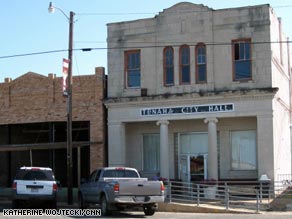
Maryland resident Amanee Busbee said she also was threatened with losing custody of her child after being stopped in Tenaha with her fiancé and his business partner. They were headed to Houston with $50,000 to complete the purchase of a restaurant, she said.-CNN"The police officer would say things to me like, 'Your son is going to child protective services because you are not saying what we need to hear,' " Busbee said.
Guillory, who practices in nearby Nacogdoches, Texas, estimates authorities in Tenaha seized $3 million between 2006 and 2008, and in about 150 cases -- virtually all of which involved African-American or Latino motorists -- the seizures were improper.
"They are disproportionately going after racial minorities," he said. "My take on the matter is that the police in Tenaha, Texas, were picking on and preying on people that were least likely to fight back."
Nevada town rallies to save prison camp
A small town finds out that slave labor is something worth fighting for in this recession.
In this former boomtown forgotten by much of the state, the small prison is a savior for residents and the cash-strapped town manager. Supervised inmates shovel snowed-in driveways, yank out weeds, clean rain gutters, slash brush and dig graves.-Los Angeles Times
"They do everything but herd cattle," said Perchetti, 63, who runs the Tonopah Convention Center. "Shoot, they fixed my plumbing a few times."
So when state officials proposed mothballing the camp to help narrow Nevada's $3-billion budget gap, residents prepared for battle. They repeatedly car-pooled to the capital -- a 460-mile round trip. To lawmakers and their staff, they handed out save-the-camp pleas written by senior citizens, high school principals, the Salvation Army, students.
SC man is latest accused recession bank robber
See also this article from the Arizona Republic today for local insight into this phenomenon otherwise known as the "reverse bailout".
Windsor is one of a growing list of unlikely suspects, ordinary people from ministers to ex-cops citing financial duress since the start of the recession in late 2007 for allegedly turning to a crime that targets fast cash — bank robbery.-Associated Press
Money troubles, specifically job losses, have also been named as possible motives in at least four of the mass shootings that have scarred the country this winter, including the deaths of 13 people and a gunman in Binghamton, N.Y., the killings of three police officers in Pittsburgh and four more plus the shooter in Oakland, Calif., and the deaths of 10 people and a gunman in south Alabama.
Bank holdups haven't grabbed the same attention, but industry figures show they go up during recessions, and experts say the pressure inevitably pushes some otherwise law-abiding people to find themselves accosting a teller at a window.
Millionaires don't feel so rich: survey

Some 46% of the 1,012 participants in the annual Fidelity Investments study said they "do not feel wealthy and are taking action to reassess and rebuild their wealth."-CNN
0:00 /5:27Buffett: Behind the scenes
That's a big change from last year, when only 19% said they didn't feel rich. Fidelity blamed the drop on the corresponding plunge in wealth, with an average 19% reduction in household income and investable assets, and a 28% plunge in real estate holdings.
Fidelity, a Boston-based financial services company, described the average respondent as having $3.5 million in assets and $306,000 in annual household income.
Cow jumps fence, escapes slaughterhouse
I think there's a lesson here for all of us.

A cow has escaped from a New York City slaughterhouse and may have a new lease on life.-Associated Press
Police say the black heifer bolted Wednesday afternoon from Musa Hala Inc., which butchers animals according to religious restrictions.
The cow wandered in Queens for about a kilometre before police captured her an hour later and took her to an Animal Care and Control centre, where she was nicknamed Molly.
Wednesday, May 6, 2009
Phoenix Class War Council Presents: The I <3 Somali Pirate T-Shirt Promo
Collin Sick
This video was something we did for fun over the weekend after a very successful weekend with our new shirts. Friday saw PCWC tabling at the monthly First Friday art walk in Phoenix, and much like last month our table was busy all night. We moved a bunch of books, pamphlets, and copies of our paper, in addition to the "No More Racism" and "I <3 height="344" width="425">
This video was something we did for fun over the weekend after a very successful weekend with our new shirts. Friday saw PCWC tabling at the monthly First Friday art walk in Phoenix, and much like last month our table was busy all night. We moved a bunch of books, pamphlets, and copies of our paper, in addition to the "No More Racism" and "I <3 height="344" width="425">
Tuesday, May 5, 2009
A future remembered in past tense
Phoenix Insurgent
Below I have embedded Helena Norberg's classic film "Ancient Futures" about globalization and capitalist accumulation on the Indian/Tibetan border. Her video, brought to my attention this week by the very informative anti-authoritarian radio show Unwelcome Guests, shows visually what many have tried to articulate in words: that poverty is an inevitable result of capitalism, not the failure of it. That is, capitalism creates poverty from whole cloth where none existed before. Norberg illustrates this by showing us that material deprivation and poverty are not the same thing.
Indeed, we see this in Mexico, where the process of capital accumulation that has occurred since the Spanish set foot there, and increasing steadily with the passage of NAFTA and the laws that preceded it, has privatized vast swaths of land, uprooting whole communities. Once living lives without material abundance as most economists would understand it but high degrees of autonomy, now they are forced into the cities of North America where they must work for a wage, creating the phenomenon of rising wages alongside rising poverty.
Capitalist economists literally don't count what you produce for yourself or trade to others in your small hamlet, but it does count those rent payments and grocery store bills. If you didn't sell it, it doesn't count, in other words. Thus, your material wealth may seem to increase at the same time your level of poverty does.
Since the PCWC members have recently read John Gibler's wonderfully insightful book "Mexico Unconquered: Chronicles of Power and Revolt", I thought I would introduce Norberg's video with an excerpt from that. As an aside, PCWC recently got a chance to hang with Gibler after a talk he gave and we can vouch that this guy is the real deal and his book is an insightful and provocative people's history of Mexico. Go get it now. You'll thank us for it.
John Gibler:
What this illustrates is the complexity of our task as revolutionaries and the depths to which the dominant ideology of capitalism has infected the dialogue of even those who seek to resist it. Here at PCWC, we seek to dig deep beyond the surface. But one question dogs us at every turn: what if our distance from these changes, what if the transformation wrought by Capital on our lives is so complete, that our imaginations fail us? This is the question of our time.
Perhaps my answer will sound more than a little Situationist influenced, then, when I say:
All power to the imagination!
And now, "Ancient Futures":
Below I have embedded Helena Norberg's classic film "Ancient Futures" about globalization and capitalist accumulation on the Indian/Tibetan border. Her video, brought to my attention this week by the very informative anti-authoritarian radio show Unwelcome Guests, shows visually what many have tried to articulate in words: that poverty is an inevitable result of capitalism, not the failure of it. That is, capitalism creates poverty from whole cloth where none existed before. Norberg illustrates this by showing us that material deprivation and poverty are not the same thing.
Indeed, we see this in Mexico, where the process of capital accumulation that has occurred since the Spanish set foot there, and increasing steadily with the passage of NAFTA and the laws that preceded it, has privatized vast swaths of land, uprooting whole communities. Once living lives without material abundance as most economists would understand it but high degrees of autonomy, now they are forced into the cities of North America where they must work for a wage, creating the phenomenon of rising wages alongside rising poverty.
Capitalist economists literally don't count what you produce for yourself or trade to others in your small hamlet, but it does count those rent payments and grocery store bills. If you didn't sell it, it doesn't count, in other words. Thus, your material wealth may seem to increase at the same time your level of poverty does.
Since the PCWC members have recently read John Gibler's wonderfully insightful book "Mexico Unconquered: Chronicles of Power and Revolt", I thought I would introduce Norberg's video with an excerpt from that. As an aside, PCWC recently got a chance to hang with Gibler after a talk he gave and we can vouch that this guy is the real deal and his book is an insightful and provocative people's history of Mexico. Go get it now. You'll thank us for it.
John Gibler:
But what is this, one may resonably ask, about poverty being an ideology, an idea? Isn't poverty a condition, and a bad one at that? Isn't poverty about living without nutritious food, without electricity and indoor plumbing, without access to adequate medical care, drinking water, good roads? Wouldn't it be insulting to say these conditions don't exist or aren't bad?We can take this a step further by considering that what this discourse further does is lock us into a dialectic in which the struggle is against poverty, or for the advancement of particular groups (workers, women, national minorities) within this economic construct. Thus, the logic of the system that creates poverty becomes the defining characteristic of the struggle against it. You can see how it's very difficult to escape from this two-edged sword. In the end, this explains why so many struggles against capitalism only wind up with the subject further embedded within it. Take the unions and communist parties as prime examples. Once standing in opposition to Capital, they everywhere now bargain with it and even prop it up.
Excavating poverty's ideological content does not deny the existence of harsh and brutal living conditions, or insinuate that such conditions reflect a wiser, truer way of life than modern industrial capitalism (a typical red herring used to counter critics). The excavation is meant to show how people ended up in horrid conditions, why they are seldom able to change those conditions, and who is responsible for pinning them there; it is meant to help understand both historical and present human actions that forced (and continue to force) people into miserable situations. The ideology of poverty performs a kind of discursive illusion to obscure both historical and current human responsibility for the creation of destitution and suffering, and thus to convince the hundreds of millions of people who are destitute that no one is really to blame for their state, and that national governments and international economists are the best ones to figure out how to help them in their toil.
What this illustrates is the complexity of our task as revolutionaries and the depths to which the dominant ideology of capitalism has infected the dialogue of even those who seek to resist it. Here at PCWC, we seek to dig deep beyond the surface. But one question dogs us at every turn: what if our distance from these changes, what if the transformation wrought by Capital on our lives is so complete, that our imaginations fail us? This is the question of our time.
Perhaps my answer will sound more than a little Situationist influenced, then, when I say:
All power to the imagination!
And now, "Ancient Futures":
Monday, May 4, 2009
Release them all! Stop jailing migrants!
This is the second text printed on the fliers that PCWC members distributed on the May Day/May 2nd immigrant solidarity march in Phoenix. This piece was by our good friend and comrade Sallydarity, "Release them all! Stop jailing migrants!" is yet another valuable contribution of hers to the understanding of the situation facing immigrants in Maricopa County.

by Sallydarity
http://chaparralrespectsnoborders.blogspot.com
We've heard the stories: Undocumented immigrants are getting kidnapped and held for ransom, and perhaps found in drop houses if the police get a tip. The migrants are vulnerable targets because they have been criminalized by the state. Something we don't hear too much about is that the biggest armed gang in the country is kidnapping migrants and holding them against their will. They're not holding them in drop houses; these uniformed kidnappers are handcuffing the migrants and incarcerating them in jails and detention centers.
If we feel that it is tragic when traffickers do it, why do we let the police get away with it? Whether they are "rescued" from traffickers, stopped while driving in one of Arpaio's sweeps, or confronted with the ridiculous charge of conspiracy to smuggle themselves, migrants get caught up in the US prison system for no other reason but crossing a man-made line in the sand.
Arpaio, taking pleasure in humiliating brown-skinned people and getting cheers from racists, stands out as the villain of Maricopa County. But the other police departments are acting in similar, more quiet ways. While migrants and activists wait to hear what the federal government will do to save us from Sheriff Joe, the Department of Homeland Security is holding hundreds of thousands of people- triple the number of people in detention just ten years ago- in detention centers. If they end 287g they will only replace it with something more tasteful; something called "Secure Communities" which will target our "criminal alien" population. Meanwhile our legislature is coming up with new ways to criminalize migrants.
Migrants have been criminalized for who they are and where they are from- not for doing harm. If anything is harmful, it's punishing people for trying to survive the results of colonialism, capitalism, and globalization (which most US citizens enjoy the benefits of). When it is nearly impossible to make a living and nearly impossible to migrate legally, anyone would travel to where they have more opportunities. Why then would advocates for immigrants' rights legitimize the arrests of undocumented immigrants by complaining only about the "legal" people who get caught up in the racial profiling sweeps? We mustn't buy into the efforts to divide us! We need to bring down the walls between us, as well as the physical walls- the border walls, the jail walls, and the walls of the detention centers.
It should be a crime to imprison people for trying to survive!

by Sallydarity
http://chaparralrespectsnoborders.blogspot.com
We've heard the stories: Undocumented immigrants are getting kidnapped and held for ransom, and perhaps found in drop houses if the police get a tip. The migrants are vulnerable targets because they have been criminalized by the state. Something we don't hear too much about is that the biggest armed gang in the country is kidnapping migrants and holding them against their will. They're not holding them in drop houses; these uniformed kidnappers are handcuffing the migrants and incarcerating them in jails and detention centers.
If we feel that it is tragic when traffickers do it, why do we let the police get away with it? Whether they are "rescued" from traffickers, stopped while driving in one of Arpaio's sweeps, or confronted with the ridiculous charge of conspiracy to smuggle themselves, migrants get caught up in the US prison system for no other reason but crossing a man-made line in the sand.
Arpaio, taking pleasure in humiliating brown-skinned people and getting cheers from racists, stands out as the villain of Maricopa County. But the other police departments are acting in similar, more quiet ways. While migrants and activists wait to hear what the federal government will do to save us from Sheriff Joe, the Department of Homeland Security is holding hundreds of thousands of people- triple the number of people in detention just ten years ago- in detention centers. If they end 287g they will only replace it with something more tasteful; something called "Secure Communities" which will target our "criminal alien" population. Meanwhile our legislature is coming up with new ways to criminalize migrants.
Migrants have been criminalized for who they are and where they are from- not for doing harm. If anything is harmful, it's punishing people for trying to survive the results of colonialism, capitalism, and globalization (which most US citizens enjoy the benefits of). When it is nearly impossible to make a living and nearly impossible to migrate legally, anyone would travel to where they have more opportunities. Why then would advocates for immigrants' rights legitimize the arrests of undocumented immigrants by complaining only about the "legal" people who get caught up in the racial profiling sweeps? We mustn't buy into the efforts to divide us! We need to bring down the walls between us, as well as the physical walls- the border walls, the jail walls, and the walls of the detention centers.
It should be a crime to imprison people for trying to survive!
Sunday, May 3, 2009
News of interest 5/3/09
A Workers’ Paradise Found Off Japan’s Coast

HIME ISLAND, Japan — If Marxism had ever produced a functional, prosperous society, it might have looked something like this tiny southern Japanese island.
-New York TimesAt first glance, there is little to set Hime (pronounced HEE-may) apart from the hundreds of other small inhabited islands that dot the coasts of Japan’s main isles. The 2,519 mostly graying islanders subsist on fishing and shrimp farming, and every summer hold a Shinto religious festival featuring dancers dressed as foxes.
But once off the ferry, the island’s sole public transportation link to the outside, visitors are greeted by an unusual sight: a tall, bronze statue of Hime’s previous mayor, rare in a country that typically shuns such political aggrandizement. Rarer still is that the statue was erected by his son, who is the island’s current mayor.
The Secret History of Kim Jong Il

I first met Kim Jong Il in October 1959. He was a senior at the elite Namsan Senior High School, and I was a 27-year-old professor of Russian at the Pyongyang University of Education. I also happened to have been chosen as a private tutor for the family of North Korean President Kim Il Sung. One day, the Great Leader remarked that he found his son’s Russian to be very poor and told me to go to his school and evaluate both Kim Jong Il’s proficiency and the quality of Russian education there. Handpicked by Joseph Stalin to rule over North Korea and a fluent Russian speaker himself, Kim Il Sung deemed study of the language essential to relations with the Soviet Union, North Korea’s biggest political, economic, and military patron. At the school, I attended every Russian class, made evaluations, and then summoned the 17-year-old Kim Jong Il into the principal’s office. The principal, one of the school’s Russian teachers, and I, in accordance with Kim Il Sung’s orders, jointly administered an oral Russian exam for Kim Jong Il.-Foreign Policy Magazine
Drug War Repression Hits Zapatistas and the Other Campaign
In an operation that bears all the marks of drug war-style repression, state and federal police detained six adherents to the Other Campaign, one Zapatista, and one unaffiliated man in Agua Azul, Chiapas. The military was also involved; it shot six warning shots into the air with live ammunition at a protest blockade, and it provided military intelligence that Chiapas state officials say was used to detain the men. The Agua Azul region is an area that in recent years has been the site of violent attacks against Zapatistas perpetrated by members of the paramilitary Organization For Defense of Indigenous and Campesino Rights (OPDDIC). OPDDIC members allegedly participated in the operation-Narco News
San Francisco May Day: Anarchists Attack Union Square Stores
High-end Union Square stores felt the wrath of a “black bloc” Friday night, just before nine p.m. That’s when, according to witnesses, a herd of about 50 protesters wearing black bandanas over their faces and cloaked in black hoodies tore through O’Farrell and Grant Streets, leaving havoc in their wake.-SF Law and Politics ExaminerThe group, police believe to be anarchists, may have splintered off from a May Day protest on immigration, before smashing at least 15 storefront windows in the Union Square shopping district. Debeers, Longchamp, Prada, Armani, Tumi, Guess and Montblanc were among the stores hit by the masked mob. Bystanders said the group shot paintballs and burned fake $100 bills while using bricks and sledgehammers to smash-in windows. Their message: down with capitalism.
Mike Davis: The swine flu crisis lays bare the meat industry's monstrous power

The Mexican swine flu, a genetic chimera probably conceived in the faecal mire of an industrial pigsty, suddenly threatens to give the whole world a fever. The initial outbreaks across North America reveal an infection already travelling at higher velocity than did the last official pandemic strain, the 1968 Hong Kong flu.Stealing the limelight from our officially appointed assassin, H5N1, this porcine virus is a threat of unknown magnitude. It seems less lethal than Sars in 2003, but as an influenza it may be more durable than Sars. Given that domesticated seasonal type-A influenzas kill as many one million people a year, even a modest increment of virulence, especially if combined with high incidence, could produce carnage equivalent to a major war.
Meanwhile, one of its first victims has been the consoling faith, long preached by the World Health Organisation, that pandemics can be contained by the rapid responses of medical bureaucracies, independent of the quality of local public health. Since the initial H5N1 deaths in Hong Kong in 1997, the WHO, with the support of most national health services, has promoted a strategy focused on the identification and isolation of a pandemic strain within its local radius of outbreak, followed by a thorough dousing of the population with antivirals and (if available) vaccine.
-The Guardian
Saturday, May 2, 2009
NEW SHIRTS FOR SALE!!!

Watch the shirts in real life action in our demo video:
New shirts from Phoenix Class War Council, hot off the presses! We have modified the jolly roger with two crossed RPGs (a favorite weapon of the pirates). On the back is the Phoenix Class War Council logo and the classic pirate quote, "And what do you mean by seizing the whole earth? Because I do it with a petty ship, I am called a robber, while you who does it with a great fleet are styled emperor."
Sixteen bucks gets it, plus shipping. All money goes directly back into expanding our propaganda operation, buying books, magazines, making more shirts and various other things. Our desire is to grow the operation so we can bring in as much anarchist and other literature/schwag, etc, as possible so we can increase the exposure of Arizona anarchy and deepen anarchist dialogue in general. Help us help you! Email us at firesneverextinguished[at]gmail.com to get one and we'll work it out.
Also, don't forget that we still have the "No Racists" Sheriff Joe shirt as well, which we're selling for twelve bucks. These are both quality shirts. Get 'em while you can.
Blood on the Line: Resistance, Empire and Repression at the Border
This is the first text from a flyer distributed at the May 2nd demonstration in front of the county jail. Perhaps a critique will appear here if I have some time to do it. Certainly a lot can be said about the generally sad state of the pro-migrant camp these days.
By Phoenix Insurgent
The border fence is a result of three factors, inextricably intertwined: the expansion of capitalism, global war for empire and the desire of common people to organize their own lives free of the first two.
In 1854, the ratification of the Gadsden Purchase settled a border dispute stemming from the American invasion of Mexico seven years earlier (the “Halls of Montezuma” reference in the Marines battle hymn pays tribute to the occupation of Mexico City). With the war over, Southern capitalists and slavocrats turned their greedy eyes west, hoping to expand their trade and the slave system. Mountainous northern Arizona was deemed too difficult for a railway, and so the US purchased from Mexico the region that now encompasses southern Arizona. Thus the border moved, splitting both Mexican cities like Nogales and native peoples' traditional lands.
During this time, the border remained open and people moved relatively freely back and forth. A surveying team in the region left stone piles every couple miles as they traveled, delineating on the land a line on a map generally deemed meaningless by the region's inhabitants, who were keen on constructing their own lives free from such interference. In fact, the first physical barrier wasn't built between the two countries until 1918, when US war hysteria led to the Battle of Ambos Nogales.
Paranoid about a German-backed invasion from Mexico, the US deployed forces to Nogales. When a man crossing the border refused inspection by US troops, it quickly degenerated into open warfare, with American soldiers exchanging fire with Mexican troops and ordinary Mexicans fed up with the degrading treatment routinely meted out by US border guards. The resulting bloodshed left three US soldiers dead and hundreds dead and wounded on the Mexican side, including the mayor of Nogales. As a result, the US built the first chain link fence dividing the two countries.
Since then, as Capital and the State expanded their domination of the region, that fence has grown, even though our resistance to it has continued. While American Capital has become increasingly free to travel to Mexico, sucking the wealth into American banks, people have fought for their right to cross the border on their own terms, free from regulation. Tribes divided by the border have struggled to maintain their historical right to cross and migrant workers have voyaged back and forth in search of work and visiting family.
And, of course, millions of white Americans have crossed for vacations and to set up second homes, something that is largely unremarked by mainstream American society. Indeed hundreds of thousands of Americans live in Mexico, many of whom never register with Mexican immigration agencies. In the US, the freedom of white people specifically and American citizens in general – and the rich of all nations -- to travel to Mexico is considered a birthright, the spoils of war. Meanwhile, the legitimate desire of other people to do the same is criminalized and regulated.
Nevertheless, the right of all humans to travel wherever they wish, whenever they want is elementary to being a free person. As an obvious impediment to that, it is therefore our position that not only should the border fence be stopped and dismantled, but that free movement of all people should be encouraged. All people now held for “immigration” violations should be immediately freed and those already deported should be allowed free travel back if they so desire. All facilities for immigrant detention should be closed and leveled without delay.
By Phoenix Insurgent
The border fence is a result of three factors, inextricably intertwined: the expansion of capitalism, global war for empire and the desire of common people to organize their own lives free of the first two.
In 1854, the ratification of the Gadsden Purchase settled a border dispute stemming from the American invasion of Mexico seven years earlier (the “Halls of Montezuma” reference in the Marines battle hymn pays tribute to the occupation of Mexico City). With the war over, Southern capitalists and slavocrats turned their greedy eyes west, hoping to expand their trade and the slave system. Mountainous northern Arizona was deemed too difficult for a railway, and so the US purchased from Mexico the region that now encompasses southern Arizona. Thus the border moved, splitting both Mexican cities like Nogales and native peoples' traditional lands.
During this time, the border remained open and people moved relatively freely back and forth. A surveying team in the region left stone piles every couple miles as they traveled, delineating on the land a line on a map generally deemed meaningless by the region's inhabitants, who were keen on constructing their own lives free from such interference. In fact, the first physical barrier wasn't built between the two countries until 1918, when US war hysteria led to the Battle of Ambos Nogales.
Paranoid about a German-backed invasion from Mexico, the US deployed forces to Nogales. When a man crossing the border refused inspection by US troops, it quickly degenerated into open warfare, with American soldiers exchanging fire with Mexican troops and ordinary Mexicans fed up with the degrading treatment routinely meted out by US border guards. The resulting bloodshed left three US soldiers dead and hundreds dead and wounded on the Mexican side, including the mayor of Nogales. As a result, the US built the first chain link fence dividing the two countries.
Since then, as Capital and the State expanded their domination of the region, that fence has grown, even though our resistance to it has continued. While American Capital has become increasingly free to travel to Mexico, sucking the wealth into American banks, people have fought for their right to cross the border on their own terms, free from regulation. Tribes divided by the border have struggled to maintain their historical right to cross and migrant workers have voyaged back and forth in search of work and visiting family.
And, of course, millions of white Americans have crossed for vacations and to set up second homes, something that is largely unremarked by mainstream American society. Indeed hundreds of thousands of Americans live in Mexico, many of whom never register with Mexican immigration agencies. In the US, the freedom of white people specifically and American citizens in general – and the rich of all nations -- to travel to Mexico is considered a birthright, the spoils of war. Meanwhile, the legitimate desire of other people to do the same is criminalized and regulated.
Nevertheless, the right of all humans to travel wherever they wish, whenever they want is elementary to being a free person. As an obvious impediment to that, it is therefore our position that not only should the border fence be stopped and dismantled, but that free movement of all people should be encouraged. All people now held for “immigration” violations should be immediately freed and those already deported should be allowed free travel back if they so desire. All facilities for immigrant detention should be closed and leveled without delay.
Subscribe to:
Posts (Atom)


